Skip to content

careerstream woksin · position 12

CastCore

Sindre Wilting — Co-founder & Chief Architect, CratisI build systems that remember everything.

Software engineer from Oslo. I work where architecture meets developer experience: event sourcing, event modeling, actor systems and the tools that make them pleasant to use. Co-founder and chief architect of Cratis, an open-source event sourcing platform, and a senior consultant at Everdeen.

View CVGitHubContact
Command
intent to change
Event
a fact that happened
Read model
a projection of facts
← Back to the Cast

This profile is from woksin.com, rendered by Cratis Cast.

Verification

Verificationchecked at build

Cratis Cast Core

Founder or maintainer of Cratis

Verified from the reviewed Cast registry: Registry/members.yaml, line 8. Only Cratis can add or change that line.
since
Jun 2024
role
Co-founder & Chief Architect
merged PRs in Cratis
4,908
commits in public repos
32,825
location
Oslo
Cratis Cast Core badge card for Sindre Alstad Wilting

Embed the badge

The badge is served from this page, so it always shows the tier as the directory last verified it.

Cratis Cast Core
  • Markdown

    [![Cratis Cast Core](https://cast.cratis.io/woksin/badge.svg)](https://cast.cratis.io/woksin)
  • HTML

    <a href="https://cast.cratis.io/woksin"><img src="https://cast.cratis.io/woksin/badge.svg" alt="Cratis Cast Core" height="20"></a>
  • Image URL

    https://cast.cratis.io/woksin/badge.svg
  • Card (Markdown)

    [![Cratis Cast](https://cast.cratis.io/woksin/badge-card.svg)](https://cast.cratis.io/woksin)

01Read model

Where the stream is now.

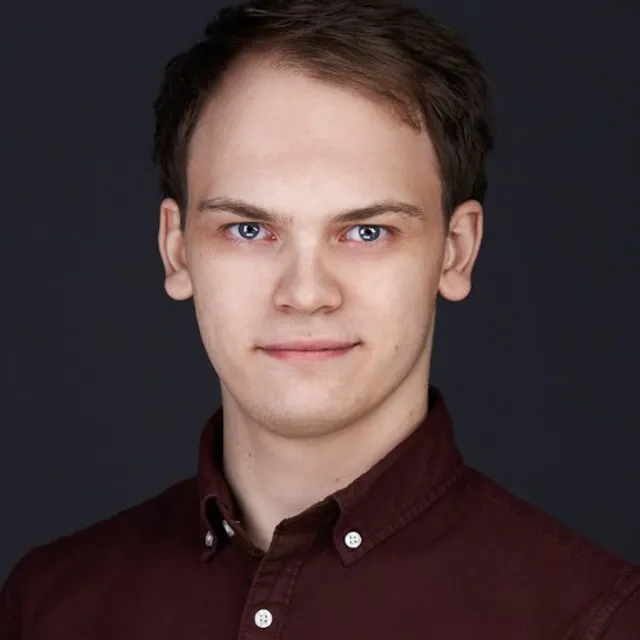
Portrait of Sindre Wilting
Sindre WiltingOslo, Norway

Projection: Sindre.Now

projected from 12 events

role
Senior Consultant
company
Everdeen
since
Jun 2025
cratis
Co-founder & Chief Architect at Cratis, since Jun 2024
contributions on GitHub in the last year
64,600+
merged PRs in the Cratis orgas of Nov 15, 2026
4,900+
committer on 8 Cratis repositories
#1
languages with a Chronicle client
6

02Event stream

Career, replayed from the event log.

Every role, skill and organization below is a projection, computed by folding these 12 events in order. Scroll, scrub or press play to watch the state rebuild itself.

Projection: Sindre.Career

position 12 / 12

Last applied

#12ToolReleasedOct 2026

Current role

Senior Consultant

Everdeen · since Jun 2025

also Co-founder & Chief Architect · Cratis

8.5

years in the field

7

organizations

36

skills

Organizations

  • Norwegian Red Cross
  • Dolittle (now Aigonix)
  • DNV · Veracity
  • Stacc
  • Kongsberg Digital · Maritime Simulation
  • Cratis
  • Everdeen

Skill cloud

  • DevOps
  • Docker
  • CI/CD
  • .NET
  • gRPC
  • Actor systems
  • Kubernetes
  • Azure
  • GitHub Actions
  • Go
  • Multi-tenancy
  • API design
  • Event-driven architecture
  • Microservices
  • Scrum
  • React
  • TypeScript
  • SaaS
  • Fintech
  • Orleans
  • Event Modeling
  • OAuth 2.0 / OIDC
  • YARP
  • Architecture
  • Chronicle
  • Arc
  • OpenTelemetry
  • Performance profiling
  • AWS
  • Serverless
  • PostgreSQL
  • Marten
  • GitLab
  • Rust
  • ratatui
  • Agentic engineering
  1. –

    Software Development Consultant

    Norwegian Red Cross

    Full-time contract on Community-Based Surveillance. Pushed a DevOps-first culture with automated build, test and deploy pipelines and Docker.

    • + DevOps
    • + Docker
    • + CI/CD
  2. OSS Platform Engineer

    Dolittle (now Aigonix) · Oslo

    Joined a startup almost from day one. Designed and built a multi-tenant event sourcing runtime on .NET, an actor framework, MongoDB and gRPC. Ran SLA-bound hosting on Azure Kubernetes and automated delivery with GitHub Actions.

    • + .NET
    • + gRPC
    • + Actor systems
    • + Kubernetes
    • + Azure
    • + GitHub Actions
    • + Go
    • + Multi-tenancy
    • + API design
  3. Software Engineer

    DNV · Veracity · Høvik

    Event-driven microservices data platform in a large international team. Standardised tooling and built reusable .NET libraries used across the software division.

    • + Event-driven architecture
    • + Microservices
    • + Scrum
  4. Senior Systems Developer

    Stacc · Oslo

    Fintech for banks across Oslo and Serbia. Revived a legacy application, set up CI/CD with coverage and vulnerability tracking, and started the move toward multi-tenant SaaS and event-driven design.

    • + React
    • + TypeScript
    • + SaaS
    • + Fintech
  5. Tech Lead, OCEAN

    Kongsberg Digital · Maritime Simulation · Horten

    Headhunted to lead OCEAN: a greenfield, event-sourced microservice system adding role-based access control to maritime simulators, on-prem or in the cloud. Ran event modeling sessions, coached the team, and owned the gateway and identity design.

    • + Orleans
    • + Event Modeling
    • + OAuth 2.0 / OIDC
    • + YARP
    • + Docker
    • + Architecture
  6. Co-founder & Chief Architect

    Cratis

    Co-founded Cratis with Einar Ingebrigtsen: an open-source event sourcing platform, from the Screenplay modeling language to the Chronicle event store. Architect, developer and content creator. OCEAN was built on it, so the framework and the product improved together.

    • + Chronicle
    • + Arc
    • + OpenTelemetry
    • + Performance profiling
  7. OCEAN live at a customer site in England

    Kongsberg Digital · Maritime Simulation

    Led the technical rollout on site, debugged first-deployment issues and made sure it worked in a real operating environment.

  8. Senior Consultant

    Everdeen · Oslo

    Senior independent consultant through Everdeen, an approved Norwegian staffing firm: event-driven, multi-tenant platforms and event modeling with client teams.

    • + AWS
    • + Serverless
    • + PostgreSQL
    • + Marten
    • + GitLab
  9. Webinar: Event Modeling

    Hive Consulting

    With Einar Ingebrigtsen (Novanet): how Event Modeling and Event Sourcing create clarity, shared understanding and control in complex projects.

  10. Webinar: Event Sourcing

    Novanet × Hive Consulting

    With Einar Ingebrigtsen: what event sourcing is, CQRS, projections and event stores, and lessons from real production implementations with Cratis.

  11. reap v5

    woksin

    Rust TUI that finds stale developer junk and prunes only what is provably safe to lose.

    • + Rust
    • + ratatui
  12. workstats v1.11

    woksin

    Local-first analytics of Git and AI-assisted work. Zero telemetry.

    • + Rust
    • + Agentic engineering

03Cratis

What I lead at Cratis.

Cratis makes event sourcing and CQRS practical: a production-grade event store and runtime, an opinionated application framework, and tooling that lets teams without event sourcing experience build robust, multi-tenant systems.

Co-founder and Chief Architect since 2024 (Cratis is a company of two: Sindre and Einar Ingebrigtsen): architecture, design and implementation of the core, with a focus on performance, robustness and correctness, plus docs, samples, videos and livestreams.

committer on 8 Cratis repositories
#1
repositories founded: AI, cli, Chronicle.Go, Chronicle.Python
4
Chronicle client languages: .NET, TypeScript, Kotlin/Java, Elixir, Go, Python
6
merged PRs in the Cratis org (4,908, as of Nov 15, 2026)
4,900+

04Event store

Every contribution, appended.

My GitHub contribution calendar, re-projected as an event store: one partition per day, brighter means more events appended. Captured when the site was built.

EventStore: github.com/woksin · partitioned by day

snapshot taken

64,680events appended in the last year

activeDays
261 / 365
longestStreak
64 days
currentStreak
64 days
busiestDay
1,771 · Mon, Oct 19, 2026
Contributions per month
MonthContributions
November 202546
December 202535
January 202684
February 2026229
March 2026369
April 2026123
May 2026446
June 2026732
July 20262,390
August 20267,303
September 202610,976
October 202629,620
November 202612,310

05Side projects

Things I build after hours.

  • CLI

    workstatsv1.11.0

    See where the work happened, without sending your work anywhere.

    • Separates human, agent-authored and AI co-authored commits
    • Agent wall-clock, parallelism and token usage
    • Open JSONL event format
    • Zero telemetry
    brew install woksin/workstats/workstats
    • Rust
  • A self-hosted family life operating system on a kitchen wall tablet.

    • Chores, rewards, routines, meals, lists and calendar
    • No punishments, no leaderboards
    • One Docker Compose stack on the LAN
    • Built on Cratis Arc and Chronicle
    • .NET 10
    • Chronicle
    • Arc
    • React 19
    • Tailwind

06PostPublished

Appended to the blog.

39 posts on blog.cratis.io, about 9 hours of reading, including the Decisions that hold series.

  1. Part 11Questions and a decision guideTen posts on keeping a decision true at the moment it is written, and one page that tells you which mechanism a rule needs, what fails without an error, and where each answer is explained in full.arcchronicleconcurrencyconstraintsevent-sourcing · 17 min read
  2. Part 10How a guard is built, merged and widenedA guard is a position in the log and a filter. This part takes one apart: where the position and the filter come from, what a second read does to them, how an explicit scope and declared concurrency join in, and how to print what a commit actually guarded.arcchronicleconcurrencyevent-sourcing · 12 min read
  3. Part 09Testing a decision against a raceA test that runs one command at a time passes with a plain read too. One line in an Arc command scenario puts a competing write between the read and the commit, and turns 'it works' into 'it still holds when someone else is faster'.arcchronicleconcurrencyevent-sourcingvalidation · 9 min read
  4. OverviewCareers that remember: introducing the Cratis CastOne cast.yaml becomes a personal site that replays your career as events, shows your public GitHub work as it happens, and carries a badge it can't give itself. The directory at cast.cratis.io is where that badge is checked.castcommunityevent-sourcing · 6 min read
  5. Part 08The same guard without Arc: decision reads and append conditionsUnder Arc's read protection is one Chronicle call you can make yourself: note where the log was, fold the state, and append only if nothing it depended on arrived since. This part writes that guard by hand, and says exactly what it is in DCB terms and what it is not.chronicleconcurrencyevent-sourcing · 13 min read
  6. Part 07Not every rule needs a guarded readRead protection is the answer for state on a key you read. It is the wrong answer for a unique email, a document two people edit, or a rule you would rather repair later. Pick by the shape of the rule, and know which choices fail silently.arcchronicleconcurrencyconstraintsevent-sourcing · 16 min read
  7. Part 06Turning read protection on in an application that already runsYou can't switch a running application to 'refuse unguarded reads' on a hunch. Measure runs every command as before and reports which reads On would guard, which it would refuse, and which appends it would reject. Here is the path from Off to On, what a real report looks like, and how to back out.arcchronicleconcurrencyevent-sourcing · 14 min read
  8. Part 05When Arc says noRead protection says no in two ways. A 400 means something the command read changed: read again and decide. A 500 means the code reads something Arc can't guard: change the code. And under Off, a caller can turn a validator's no into a yes.arcchronicleconcurrencyvalidationtypescript · 13 min read
  9. Part 04A limit for one account and one monthA monthly withdrawal limit depends on one month of one account. Declare that stream on the read model and route the command to it, and the guard covers that month only: a withdrawal in October conflicts, one in November doesn't.arcchronicleconcurrencyevent-sourcingvalidation · 9 min read
  10. Part 03One rule, two entities, one appendA member may hold three loans, and a book has one copy left. Two read models in one validator, one fact for each entity, one atomic append, and if either side changed after the read, nothing is written.arcchronicleconcurrencyevent-sourcingvalidation · 9 min read
  11. Part 02The read model said yesA command that reads a read model and then appends can approve the same last copy twice. One project setting turns that read into a guard: the same command, the same validator, and the loser of the race gets a 400 that says nothing was written.arcchronicleconcurrencyevent-sourcingvalidation · 11 min read
  12. Part 01The bug you never seeIs there stock? Is the name free? Is the balance enough? Every check-then-act decision has a gap between the check and the write, and two requests can both pass it. Nothing throws, the tests are green, and the bad state turns up weeks later. Why that is, what the database defaults do and don't do, and how to spot it in your own code.concurrencyevent-sourcingcqrspostgresqlsql-server · 14 min read
  13. Part 01Events are facts: naming and shaping eventsAn event records something that happened, and no event is taken out of the log afterwards. How to name and shape events that still read in five years, and what Chronicle stores with each one: a sequence number, its source, the operation it belonged to, who caused it and why.chronicleevent-sourcingevent-modelingarc · 15 min read
  14. Part 02Inside Chronicle: how the event store appends eventsChronicle's append returns without waiting for a single projection. What the kernel does inside that call, how observers and partitions pick the event up afterwards, and what happens when one of them fails.chronicleevent-sourcingorleansarchitecture · 12 min read
  15. Part 03Projections and read models in Chronicle and ArcOne attribute turns AuthorRegistered into a list on a screen. Model-bound, fluent and PDL projections, reducers for when attributes can't say it, where read models are stored, how a live list learns about changes, and what Chronicle does when a projection changes or has to be rebuilt.chroniclearcprojectionsread-modelsevent-sourcing · 13 min read
  16. Part 04Reactors, webhooks and subscriptions: reacting to eventsReactors, webhooks and outbox-to-inbox subscriptions carry what happened to whoever cares. A failing handler stops one partition, a reactor can return its follow-up facts, and a stable delivery id is what lets a side effect survive running twice.chroniclereactorswebhookssubscriptionsevent-sourcing · 13 min read
  17. Part 05Event sourcing constraints and concurrency at write timeChecking a plain read model before you append enforces nothing. Constraints, concurrency scopes, decision reads, Arc's read protection and Arc aggregates check at write time, and each reaches a different set of appends.chroniclearcconstraintsconcurrencyevent-sourcing · 16 min read
  18. Part 06CQRS with Arc: commands and queries without the plumbingA command is a record with a Handle method and a query is a static method on the read model it returns. What Arc builds from those two shapes, in which order it checks a request, what reaches the generated TypeScript, and what stays the application's job.arccqrsdotnettypescriptvalidation · 14 min read
  19. Part 07Validation in a CQRS app, from browser to event logEvery place a rule can live in a Cratis application, from the rules copied into the browser to Chronicle's append. What each layer can and can't guarantee, why a taken author name is caught in only one of them, and which rejections find their way back to a form field.validationarcchronicleconstraintstypescript · 14 min read
  20. Part 08Live queries and real-time React UIs with ArcIn Arc, a query that loads once and a query that keeps pushing results to React differ by one return type, given data that notifies on change. The whole path from a write to the screen, the transport underneath, the hook and its states, command dialogs, view models and live tables, and which hop is live and which is a snapshot.arccomponentsreactobservable-queriestypescript · 16 min read
  21. Part 09Cratis Components: the React layer for ArcThe author list and the register dialog from the cratis template, built with Cratis Components 4. Which parts come from Components and which from Arc, how a field binds to a generated command, how a taken name gets back to the Name field, theming and renderer adapters, and where the library stops.componentsreactarctypescriptfrontend · 14 min read
  22. Part 10Multi-tenancy and identity with AuthProxy, Arc and ChronicleAuthProxy signs the user in, picks a tenant and forwards it as x-cratis-tenant-id, the header Arc reads by default, and Chronicle turns the tenant into a namespace. Every hop from the edge to storage, what a missing tenant becomes at each one, and what stays yours to check.tenancyidentityauthproxyarcchronicle · 16 min read
  23. Part 11Testing event-sourced apps with Arc and ChronicleMost specs in a Cratis application can call a method and compare the event it returns. What the in-process scenarios add on top, the ways a green spec proves nothing, and the few tests that still need a real Chronicle and a running host.testingarcchroniclespecificationsevent-sourcing · 13 min read
  24. Part 12Event sourcing beyond .NET: Kotlin, Java, TypeScript, ElixirChronicle has clients for .NET, Kotlin and Java, TypeScript and Elixir, and Arc has servers on ASP.NET Core, Spring Boot and, as a source preview, Node.js. What each one gives you today, which registry it comes from, and the defaults that still differ from .NET.arcchroniclekotlintypescriptelixir · 16 min read
  25. Part 13Personal data in an event log: PII and crypto-shreddingChronicle erases a person by destroying their key. The events stay, their marked values read as empty, and the fence stops the key from coming back.chroniclearcpiiprivacyevent-sourcing · 16 min read
  26. Part 14Event sourcing in year two: changes, replays and correctionsA new event shape, a new view over old events, a correction to a stored fact and an observer stuck on one stream look alike, and they aren't. What each one changes in Chronicle, what the kernel works out on its own, and what an operator still decides.chronicleevent-sourcingmigrationsreplayoperations · 13 min read
  27. Part 15Arc gotchas: validation, proxy generation and naming conventionsThree places Arc's conventions make a decision you might not see: a validator that runs in the browser and on the server but not identically, a proxy folder the generator owns, and routes, event identities and mappings chosen by a name. What each one does, and the fix.arcproxy-generationvalidationchronicletypescript · 13 min read
  28. Part 16Chronicle Workbench: a browser UI for your event storeThe Chronicle server serves its own browser tool on the port your clients already use. What each screen shows, how to follow a failed partition back to one author, and which screens can change a store.chronicleworkbenchoperationsevent-sourcing · 11 min read
  29. Part 17The Cratis CLI: diagnose, workbench and llm-contextA diagnostic summary that fails on a failed partition and not on lag, a full-screen terminal workbench for the box you reached over SSH, and a command catalog that tells an agent which commands change the server.clichronicleoperationsaievent-sourcing · 13 min read
  30. Part 18Running Chronicle in production: storage, security, backupWhat Chronicle's production image won't start without, how the storage choice changes where read models land, what a client trusts until you tell it otherwise, where a trace stops today, and the backup order that decides whether a restore can be read.chronicleoperationshostingsecurityobservability · 15 min read
  31. Part 19Chronicle replay jobs, scale and performanceReplays you can stop and resume, what a crash in the middle of one delivers twice, how events reach observers without making appends wait, and what running Chronicle on more than one node does and doesn't promise.chronicleoperationsperformanceclusteringevent-sourcing · 13 min read
  32. Part 20Event modeling with Screenplay: a model you can compileThe .play language for writing an event model down next to the code, a compiler whose diagnostic codes don't change, personal data declared once on a value, and an MCP server that lets an assistant propose changes a person applies.screenplayevent-modelingclimcpai · 13 min read
  33. Part 21Stage and Scene: generating code from an event modelStage renders a narrow slice of a Screenplay model into C# on Arc and Chronicle, boots a throwaway sandbox and runs the model's examples, and refuses with a code whatever it can't express. Scene is the UI model between a screen in the model and React.stagescenescreenplayevent-modelingarc · 12 min read
  34. Part 22Prologue: a first event model of an existing systemPrologue stands beside a running system, records the metadata of what it does, and proposes a Screenplay model for a person to correct. What it watches, what it never records, how it groups what it sees, and what a language model may and may not change.prologuescreenplayevent-modelingcliai · 12 min read
  35. Part 23Cratis Studio: event modeling for the whole teamA shared board and canvas where people and AI agents work on the same event model, Screenplay text you can diff, and opt-in code for one slice in your own repository. What Cratis Studio does at each step, and where each step stops.cratis-studioevent-modelingscreenplaystageai · 11 min read
  36. Part 24Cratis Direct: an agentic development life cycleHow a person admits agent work in Cratis Direct, what each gate records, and who merges the pull request. The control plane we run our own engineering on, followed through one issue, and where it stops.cratis-directagentsaiengineeringchronicle · 11 min read
  37. Part 25AI across the Cratis stack: corpus, CLI and MCPWhere an assistant meets Cratis: the AI corpus and its hooks, the CLI's effect labels, Chronicle MCP, Screenplay MCP and the docs assistant. What each one lets an assistant read, propose or change, and the checks that run whether it listened or not.aimcpclichroniclescreenplay · 14 min read
  38. Part 26Getting started with Cratis: templates, samples and toolsFrom an empty folder to a running Cratis application with dotnet new cratis or cratis new, the samples and what each leaves out, and the smaller tools around the stack: Fundamentals, Specifications, Synopsis, Narrator, Lens and the docs. It closes with where to start and the full series index.templatessamplesfundamentalsspecificationssynopsis · 21 min read
  39. OverviewEvent sourcing with Cratis: one feature from model to productionThe sticky-note feature followed from its model to production, into year two and to agents writing its code, through every Cratis product this post names, with 26 more posts that take each one all the way down.ecosystemauthproxyarcchroniclecli · 26 min read

snapshot taken

08Command

Append an event to my stream.

Questions about event sourcing, Cratis, a project or a role? Issue the command and it lands in my inbox.

Commandwoksin/inbox

SendMessage

to
Sindre Wilting
from
you
channel
GitHub · LinkedIn · cratis
↑↓ navigate ↵ run

woksin@stream: ~

Type help for a list of commands. Up and down browse history, Tab completes, Escape closes.